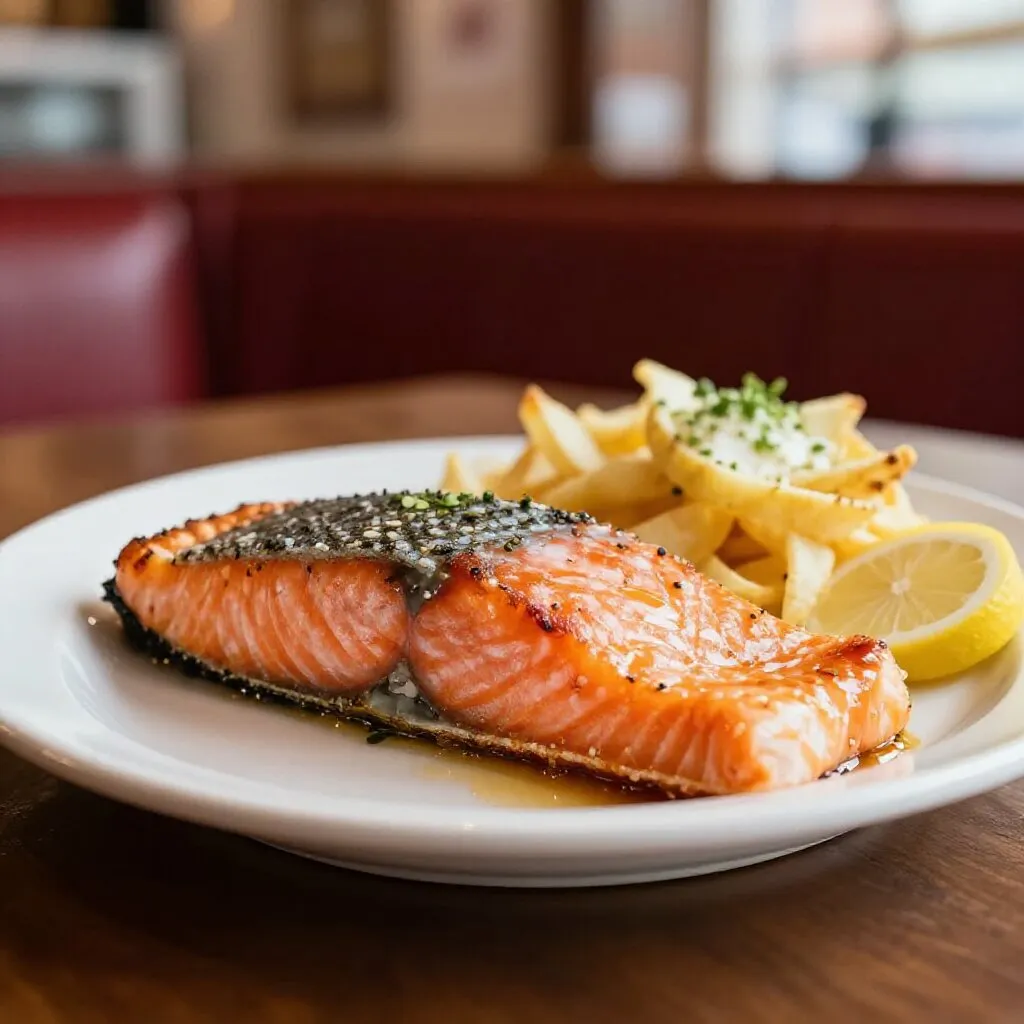
Cedar Plank Salmon
Wild salmon fillets grilled on aromatic cedar planks, infusing the fish with a subtle smoky sweetness while keeping it incredibly moist. This Pacific Northwest tradition creates a spectacular presentation and delivers unmatched flavor that transforms ordinary salmon into an unforgettable dining experience.
By Système
Community chef
Ingredients
- •600 g Salmon
- •40 g Honey
- •40 ml Soy sauce
- •10 g Garlic
- •20 ml Lemon Juice
Instructions
- 1
Submerge the cedar plank in cold water for at least 2 hours, or preferably overnight. Weight it down with a heavy can or plate to keep it fully submerged. The soaked wood will steam rather than catch fire, infusing the salmon with its distinctive aroma. Never skip this crucial step.
- 2
Select 4 salmon fillets (about 180g each), preferably wild-caught sockeye or king salmon for the best flavor. Check for pin bones by running your fingers along the flesh, removing any with tweezers. Pat the fillets completely dry with paper towels.
- 3
Prepare a simple glaze by whisking together 3 tablespoons pure maple syrup, 2 tablespoons Dijon mustard, 1 tablespoon soy sauce, 1 minced garlic clove, and a pinch of cayenne. This sweet-savory mixture complements the smoky cedar beautifully.
- 4
Season the salmon fillets on both sides with salt and freshly ground black pepper. Brush the flesh side generously with the maple-Dijon glaze, reserving some for basting. Let the salmon come to room temperature while you preheat the grill.
- 5
Preheat your grill to medium-high heat (about 200°C). Remove the cedar plank from the water and place it directly on the hot grill grates. Close the lid and heat for 3-4 minutes until the plank begins to smoke slightly and crackle. This primes the wood for cooking.
- 6
Place the glazed salmon fillets skin-side down on the heated cedar plank, spacing them about 2cm apart to allow heat circulation. Close the grill lid immediately to trap the aromatic smoke inside.
- 7
Grill with the lid closed for 12-15 minutes, resisting the urge to open frequently. The salmon is done when it flakes easily with a fork and reaches an internal temperature of 55°C for medium or 60°C for well-done. The edges should be caramelized from the glaze.
- 8
Brush the salmon with the reserved glaze during the last 3 minutes of cooking. Watch carefully for flare-ups - if the plank edges start to flame, spritz with water from a spray bottle. Some charring on the plank is normal and adds flavor.
- 9
Carefully remove the entire plank from the grill using heat-resistant gloves or tongs. Place on a heat-safe surface. The wood will be extremely hot and may continue smoking. Let the salmon rest on the plank for 3-5 minutes.
- 10
While resting, prepare a quick garnish of 2 tablespoons chopped fresh dill mixed with the zest of 1 lemon. This bright, herby topping provides a fresh contrast to the rich, smoky fish.
- 11
Serve the salmon directly from the cedar plank for dramatic tableside presentation. The plank becomes a rustic serving board that keeps the fish warm. Sprinkle with the dill-lemon mixture and add lemon wedges on the side.
- 12
Accompany with grilled asparagus, a wild rice pilaf, or roasted fingerling potatoes. The smoky, maple-glazed salmon pairs beautifully with a crisp Riesling or unoaked Chardonnay. The cedar plank can be scrubbed and reused 2-3 times.
Nutritional values
353
Calories
30.8g
Protein
9.9g
Carbs
19.5g
Fat
0.1g
Fiber
Want to cook this recipe?
Add it to your meal plan and automatically generate your shopping list.
Rate this recipe
Statistics
This recipe is shared under CC_BY license. Published on 1/6/2026.